Aircraft anatomy / Read the outside
The Shape Behind the Flight
A wing is both a surface that meets the air and a structure that carries loads. Its edges, seams and moving sections let you read both stories.
A curved edge, a working surface
The leading edge is the front boundary of a wing. The trailing edge is the rear boundary. Between them, the wing’s cross-sectional shape—its airfoil—helps determine how airflow and pressure develop around it.
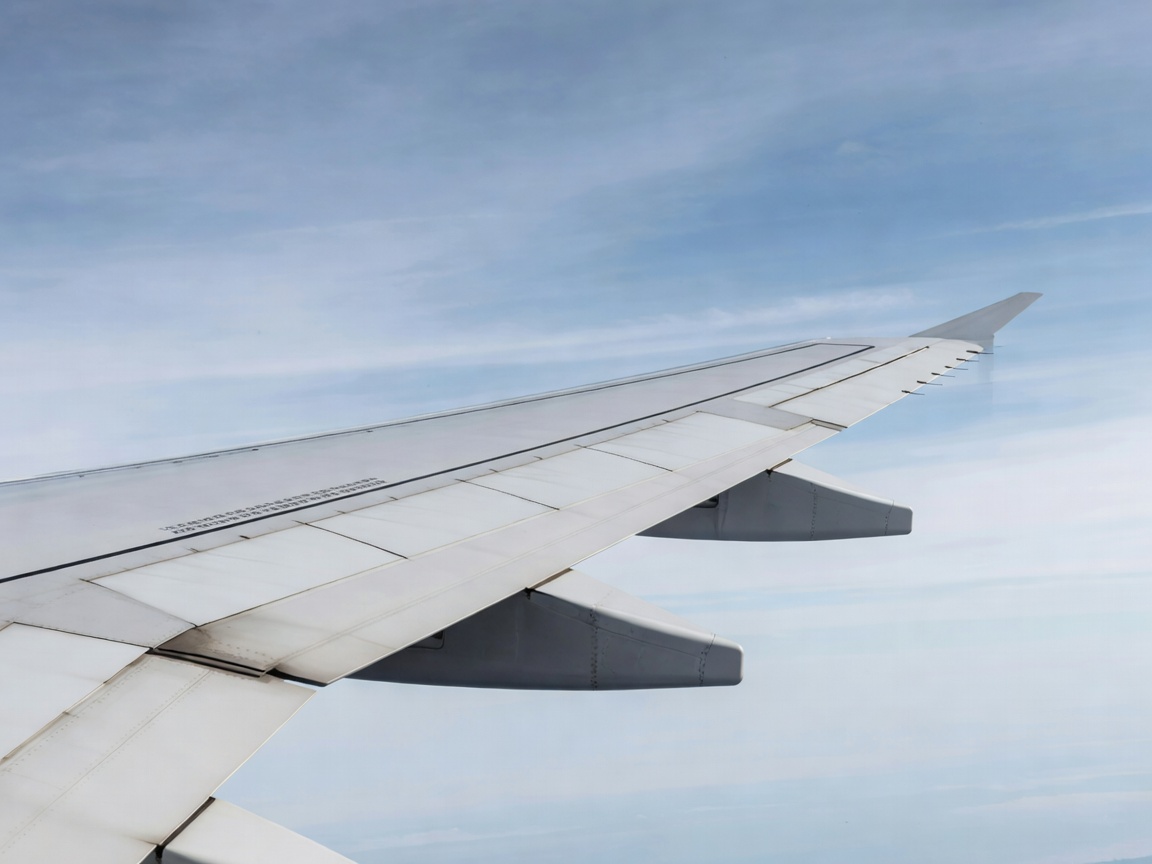
- 1 / Leading edgeThe forward edge where the approaching airflow meets the wing.
- 2 / Upper surfaceA shaped surface over which pressure varies as the aircraft moves.
- 3 / Trailing-edge regionThe rear boundary, often incorporating flaps and ailerons.
A wing is not necessarily curved the same way above and below. Many airfoils have camber, a curvature of their mean line. Others are symmetric. The wing’s angle to the approaching airflow also matters; shape alone does not determine lift.
Think of an airfoil as a shape working in a moving flow—not a shape that produces lift by itself.
The skin is more than a cover
Look at a line of rivets. Each rivet is a mechanical fastener joining parts. In many metal aircraft, the skin carries part of the load along with internal frames, ribs, stringers and spars.
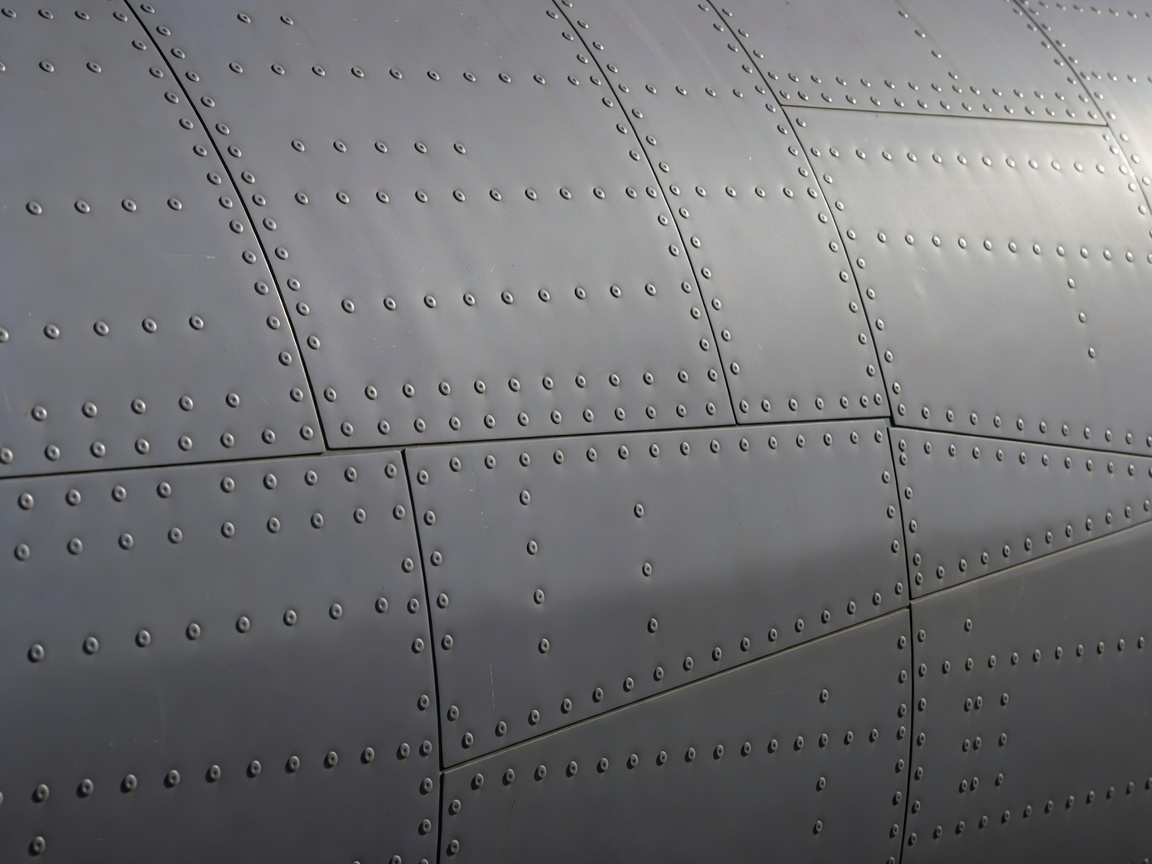
A spar is a major spanwise member inside a wing. Ribs help preserve its cross-sectional shape. Stringers stiffen skin panels. You usually cannot see these directly, but the visible attachment pattern can provide clues to their positions.
Not every aircraft uses the same construction. Composite structures may use bonded joints, different fasteners and different internal arrangements. A surface without obvious rivet rows is not a surface without structure.
Find the parts that move
Near a wing’s trailing edge, a defined section may be an aileron or a flap. The distinction is about its job, not just its outline.
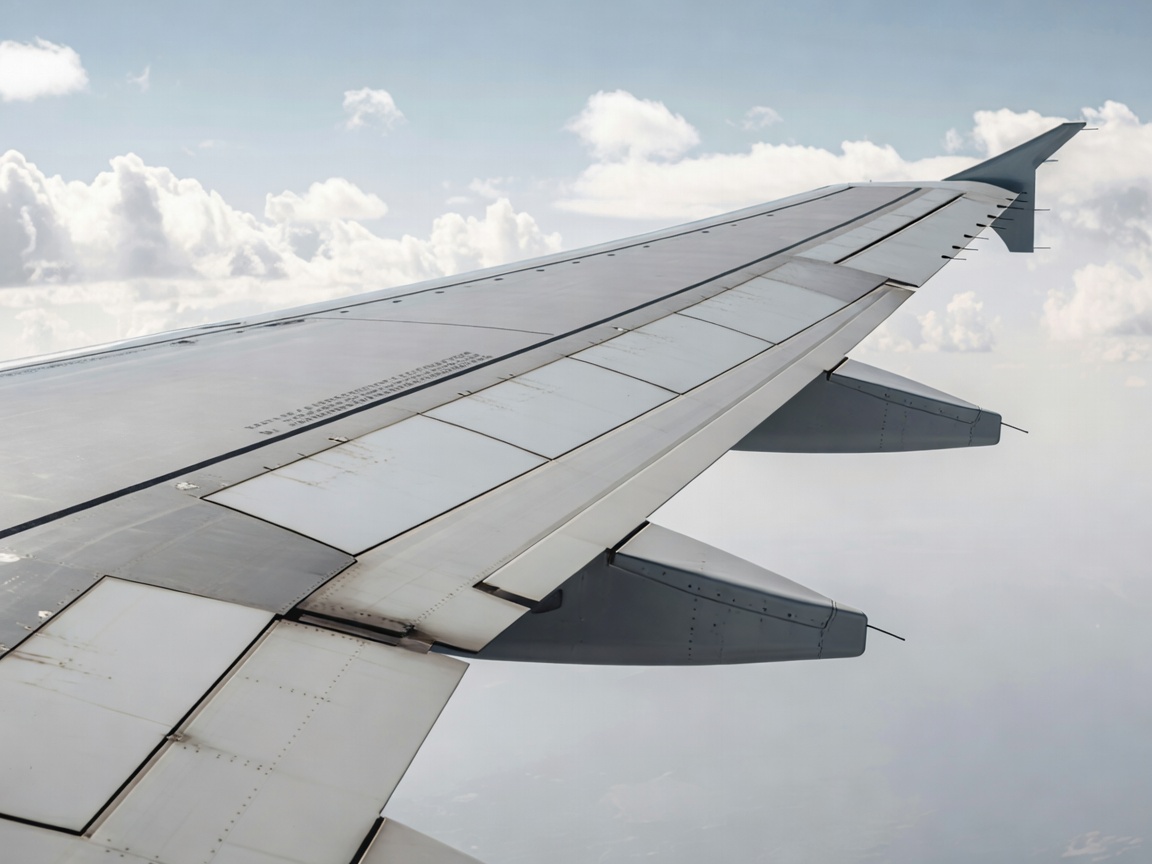
- Ailerons: controlling roll
Ailerons alter the aerodynamic forces on the wings to help roll the airplane. They generally move in opposite directions, though modern control arrangements can be more complex.
- Flaps: changing the wing
Flaps alter the wing’s effective shape and, on some designs, its area. They usually increase lift capability at lower speeds while also increasing drag.
- Spoilers: disturbing airflow
Raised panels on the upper wing surface reduce lift and increase drag. Depending on the design, they assist roll control, descent or lift reduction after landing.
A visible gap is often the boundary between a fixed structure and a surface with a carefully defined range of motion.
The tail has its own control surfaces. An elevator, or a moving horizontal tail, helps control pitch. The rudder helps control yaw. These movements work together; they are not isolated steering commands.